New York, September 29, 2025
As high-level week of the 80th session of the United Nations General Assembly (UNGA80) nears its conclusion in New York, Center for Civilians in Conflict (CIVIC) emphasizes that the protection of civilians must remain at the heart of UN reforms, the humanitarian reset, and the commitments voiced by leaders this week to address the growing number of humanitarian crises worldwide.
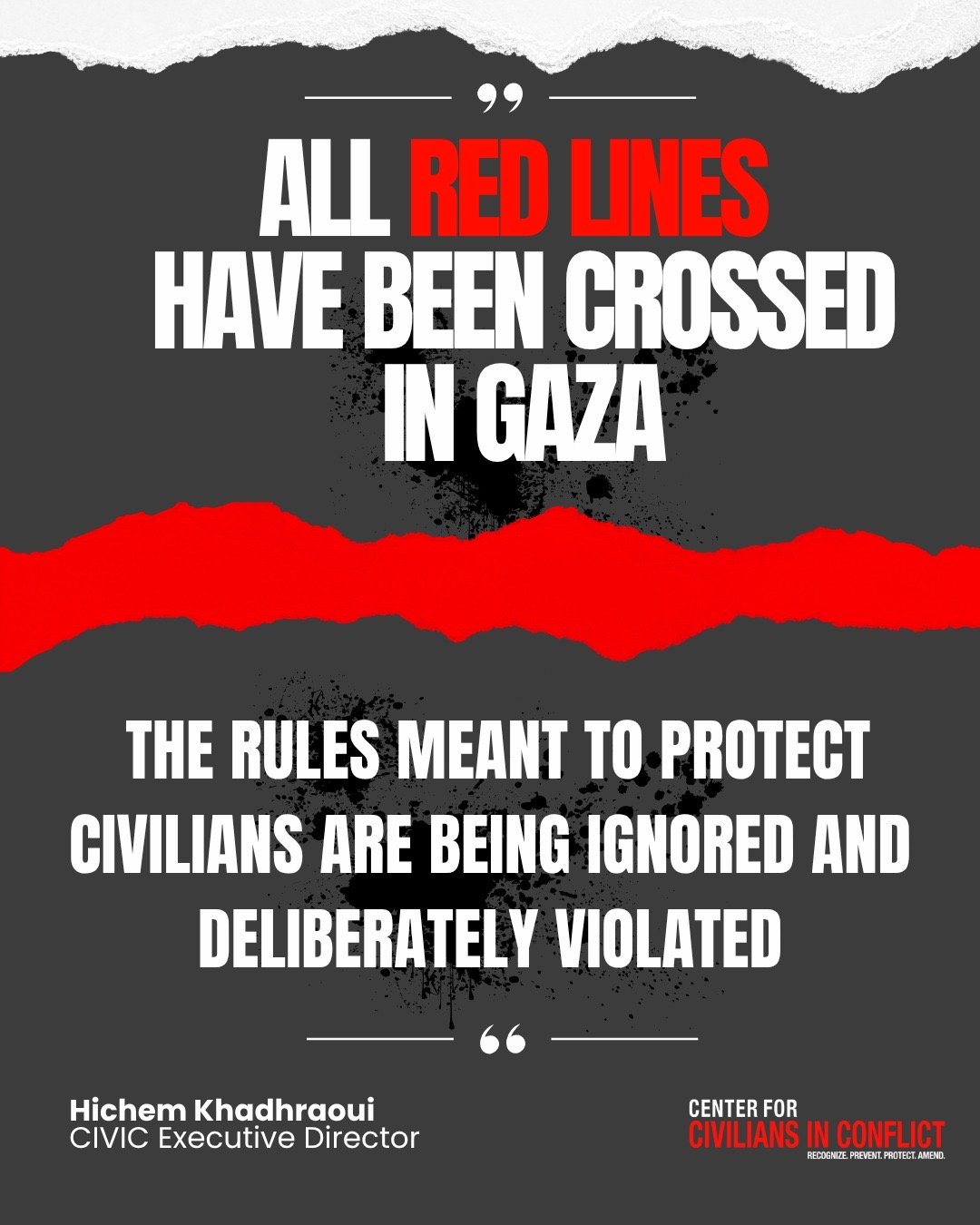
“Protection of civilians must remain central to the UN’s work. Without it, the credibility of the international system is at stake,” said Hichem Khadhraoui, Executive Director at CIVIC. “Budgets and structures matter a great deal, but what matters most is whether civilians are safer.”
Cutbacks to financial support for the humanitarian sector cannot come at the expense of civilians living in armed conflict, especially as needs continue to grow. UN reform in this context must avoid diluting protection mandates or reducing key personnel who deliver on protection, which would undermine the UN’s ability to prevent and respond to harm where it is most urgently needed.
Equally important, the UN and humanitarian actors must be able to reach those in need and operate without fear of attack. Guaranteeing safe access is essential to mitigating the worst effects of crises, as starkly illustrated by the suffering of civilians in Gaza.
The humanitarian reset offers an opportunity to shift power closer to the ground, but only if local and women-led organizations receive the sustained resources and decision-making authority they need. Evidence from conflict-affected areas where CIVIC works demonstrates that when such organizations are supported — including through direct initiatives such as micro-grants — they can strengthen protection and reduce harm in their communities.
“Everywhere we work — from Yemen and Somalia to Sudan and Ukraine — we see that when communities are empowered and supported, civilian harm decreases. Strengthening those voices in the field is not optional. Rather, it is the foundation of meaningful protection,” Khadhraoui said.
As the UN reviews the future of peace operations, Member States must ensure that protection remains a priority — from large multidimensional peacekeeping missions to smaller regional political initiatives. Community-first strategies, harm tracking, and early warning networks are proven tools that reduce civilian harm and must be reinforced.
CIVIC urges Member States and UN leadership to carry forward the momentum of UNGA80 by turning high-level commitments into concrete action that makes civilians safer and communities stronger.
--------------
For additional information or media inquiries, please contact:
CIVIC Global Media Team: comms@civiliansinconflict.org
CIVIC US Communications and Media Manager: mlongmore@civiliansinconflict.org, +1 208 403 4216